
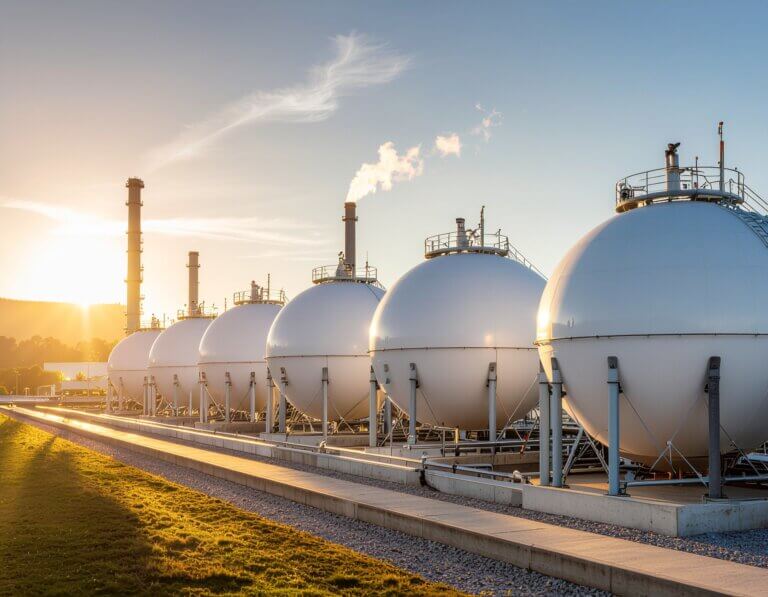
To store petroleum safely and properly, you must maintain compliance with all local and federal regulations. Petroleum must be stored in approved, clearly labeled, airtight containers. It should be kept in a cool, dry, and well-ventilated area and protected from excess heat and direct sunlight. You should also have rigorous and clearly defined safety protocols in place such as routine inspections, leak detection, fuel rotation, fuel stabilizers, and a containment and spill prevention plan. For Arizona facilities, this can present a challenge due to our extreme heat, high winds, and frequent dust storms. Grohall can help you implement the ideal petroleum storage solution for your facility while also mitigating the risks associated with Arizona’s weather and climate.
Underground Storage Facilities
It’s crucial to minimize environmental impact to ensure the safety of your petroleum storage containers and protect them from extreme temperatures. An underground storage facility offers large-scale and long-term storage for crude oil and other refined petroleum products. Underground storage can reduce permeability and mitigate the risk of leaks. Storage containers will also be better protected from heat, weather, and other risks.
Above Ground Storage Tanks
Specialized petroleum storage tanks can be stored above ground for facilities with smaller reserves, or where temporary storage solutions are needed. You will need to use specialized storage tanks that are specifically designed and rated for storing petroleum in an extreme desert environment. Your tanks should feature:
- Insulation – Tanks should be insulated to protect the contents from extreme heat or temperature fluctuations. The insulation should be eco-friendly and made from material that does not negatively interact with petroleum.
- Reflective coatings – The color of the tanks should be light and should have a reflective finish to reduce solar heat gain.
- Secondary containment – You must use secondary containment measures to prevent leaks, such as double-wall tanks or integral dikes.
- Ventilation – All petroleum storage containers must be properly ventilated to prevent pressure buildup according to industry regulations, federal laws, and EPA requirements.
- Shading – Using shade structures can protect tanks from the sun and prevent accidental vapor ignition.
- Durable materials – Any storage containers or tanks used must be made from durable materials that are resistant to corrosion and UV degradation.
Temporary or Portable Storage Tanks
If you need to transport petroleum to a remote facility or job site or need temporary storage solutions for an extreme or rugged environment, you may consider using portable storage tanks. These tanks offer rugged construction, durable materials, eco-friendly transportation options, and heat protection. However, they also must integrate robust containment measures to prevent spills and accidents. The most popular ones include frac tanks, poly transport tanks, and trailer-mounted petroleum tanks.
Grohall can help you find the right petroleum storage tanks, containers, and other equipment for your needs. We distribute specialized petroleum equipment designed to meet the unique environmental needs of desert facilities. Call us now at (520) 622-4263 or 1-800-624-0003 or email us at sales@grohall.com to find out how we can help you upgrade your petroleum and lubrication equipment.